Section 25.1
SPN 100/FMI 1
SPN 100/FMI 1 is typically low engine oil pressure.
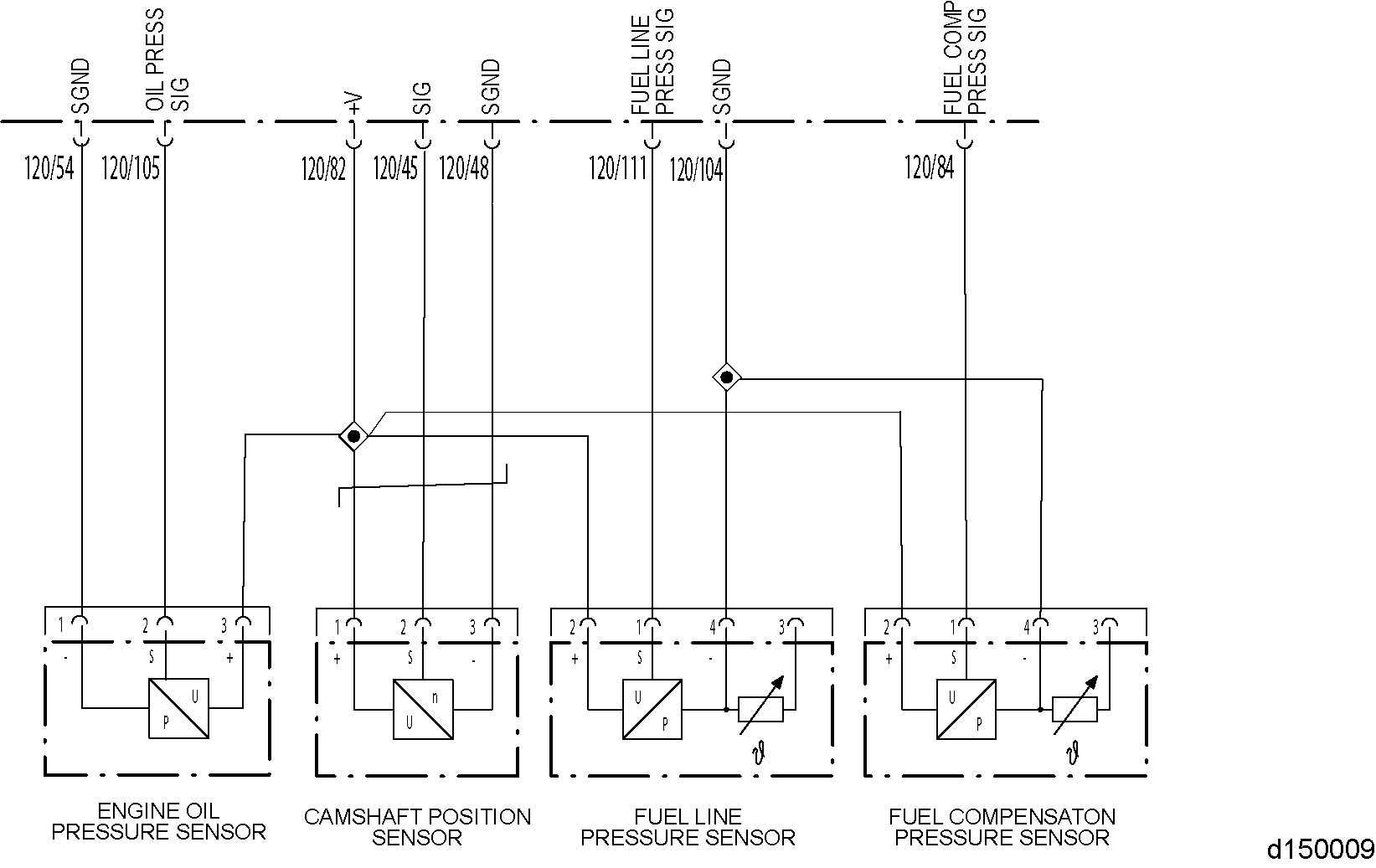
Check as follows:
- Check for multiple codes.
- If fault codes 100/1 and 100/3 are both active, refer to "26.2 SPN 100/FMI 3" .
- If fault codes 100/1 and 100/4 are both active, refer to "26.3 SPN 100/FMI 4" .
- If only fault code 100/1 is active, go to the next step.
- Observe the stability of the oil pressure.
- If the oil pressure is in normal operating range and stable, go to the next step.
- If the oil pressure is fluctuating, go to step 4 .
- Check the oil level.
Note: An increase in the engine oil level indicates fuel may be leaking into the engine oil.
- If the oil level is high, check for fuel entering into the engine oil system and repair as required. Change the engine oil. refer to "25.1.1 Verify Repairs" .
- If the engine oil level is low, fill oil to proper level. refer to "25.1.1 Verify Repairs" .
- Check the operation of the oil gage.
- If the oil gage readings are erratic, repair or replace the oil gage as required.refer to "25.1.1 Verify Repairs" .
- If the oil gage readings are fine, go to the next step.
- Check the condition of the oil pump suction pipe.
- If the pipe is loose or cracked, replace a cracked pipe and reinstall a loose pipe. refer to "25.1.1 Verify Repairs" .
- If there is no problem with the oil pump suction pipe, go to the next step.
- Check the condition of the oil pump drive and driven gears.
- If either gear is loose, repair or replace loose gears as required. refer to "25.1.1 Verify Repairs" .
- If neither gear is loose, go to the next step.
- Check for a faulty oil pressure relief valve.
- If the relief valve does not open at the set pressure or sticks open, repair or replace a faulty oil pressure relief valve as required. refer to "25.1.1 Verify Repairs" .
- If the relief valve is fine, refer to "25.1.1 Verify Repairs" .
Section 25.1.1
Verify Repairs
Verify repairs as follows:
- Turn ignition OFF.
- Reconnect any electrical connections that were disconnected to perform the diagnosis.
- Clear codes with DDDL 7.0 or latest version.

ENGINE EXHAUST
To avoid injury from inhaling engine exhaust, always operate the engine in a well-ventilated area. Engine exhaust is toxic.
- Start and bring engine up to operating temperature (over 140°F/60°C).
- Verify operation is satisfactory and no warning lamps illuminate. If warning lamps illuminate, troubleshoot the codes. If assistance is required, call the Detroit Diesel Customer Support Center at 313–592–5800.
| EPA07 DD15 Troubleshooting Guide - DDC-SVC-MAN-0029 |
| Generated on 10-13-2008 |